Trick and Treat
For the past 30 days we've had bones on our minds. I don't know about your neighborhood, but mine is sporting bones on every lawn! And bones make me think of art. And when I think of art, I think of Leonardo da Vinci.
So how is it that Leonardo tricks us into believing that this 2D drawing is 3 dimensional? It looks more like he's carved those cranial cavaties, right? But it's just a mass of lines, textures, values, shapes. That's all.
Da Vinci would say it begins with observation: "All our knowledge has its origins in our perceptions."
Beyond that, the magic word is simply this: work.
You know the old adage: Practice makes perfect. Turns out it's true. When it comes to tricking the eye, only the tenacious succeed.
That's where YOU come in (yes, you).
Truth is, anyone can draw.
So why not try? Let Leonardo guide you. Start by asking yourself," What exactly did he do with line, texture, shape, and value? Grab a pencil, an eraser, some quality paper and get cozy (art does not happen in a flash). And when you think you're finished, set the drawing aside and come back to it later with fresh eyes. I'm sure you'll see something new to add, some small space to revise. Keep going. You'll know when your drawing is complete. And when you know, you'll see. Your drawing will be a treat to the eye ready, like Marlo's, to mark your initials.
F is for Foil
Introducing F is for easy. F is for foil!
But it's so much more…
F is of course for fox, fish, frog. But it's also for feather and fur, a forest on fire, a flock of flamingos. F is a fantastic friend.
F is also for books: The Story of Ferdinand by Munro Leaf, Frog and Toad are Friends by Arnold Lobel, Fish is Fish by Leo Lionni, and From Head to Toe by Eric Carle.
-Kim
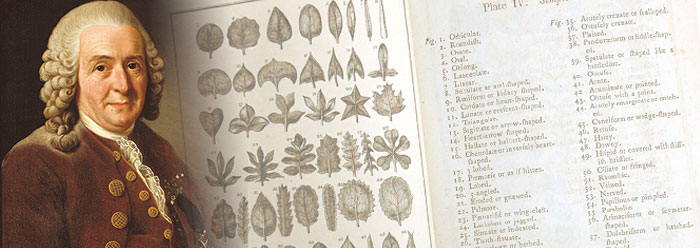
Making Carolus Linnaeus Proud

Happy Birthday Antonie van Leeuwenhoek!
It began with a hefty dose of imagination, a glass pearl, and some strands of fabric.
Antonie van Leeuwenhoek, the very first microbiologist never intended to be the world’s first microbiologist. He was actually a tradesman who had never studied science!
From the time he was 16, he apprenticed in a linen-draper’s shop. Soon he became a merchant because he worked diligently. He developed a fascination for the small world that our eyes alone cannot see while working with fabric, using pearls of glass to observe the fine weave of linen.
He developed more than 200 microscopes during his lifetime and made many important discoveries including the first observations of bacteria which he called “animalcules” in 1674, “animals so small, in my sight, that I judged that even if 100 of these very wee animals lay stretched out one against another, they could not reach the length of a grain of coarse sand”.
During his lifetime, he made many discoveries and observations that he carefully documented and illustrated. He died a very old man who accomplished his important work, a work that inspired generations to follow in his footsteps..
So what better way to celebrate the birthday of this man of science (October, 24, 1632) than to create a close observation of something from the micro-world? You can begin with a microscope or, because we live in the 21st century, a Google image!
This amazing drawing of cocci (bacteria that can lead to diseases such as strep throat) was done by former apprentice Marlo. What makes this observation incredible is the detail she included. So did she complete this in 15 minutes? No way! Do you think it took over an hour? One sitting? Two sittings? The answer is unknown. But I can say with certainty that Marlo dedicated sincere concentration to this accomplishment. The reward is, well, obvious!
Anyone can create an observational drawing, think Dory’s song: “Just keep swimming!”
Collecting Echinoderms
If you are adventuring through our brand new unit, Taxonomy of Living Things: The Five Kingdoms of Life, meander with me for a moment…
Echinoderm? Whoever said, "It's all in a name," sure got it right. Echinoderms got their name because they are spiny-skinned marine animals. They possess radial symmetry, and many possess 5 arms (or multiples of 5). Sounds oh so scientific, but we've all seen these animals- sea stars, urchins, and sand dollars.
Art of Words
Collagraphy is printmaking process that is related to the art of collage. Do you see the connection between the words? It is sometimes called "relief printing" because the subject to be printed is raised from the print block. You can print anything this way, from fiber to sandpaper, feathers to paperclips.
Stopping to think about the word origin, one comes from the Greek word koala, meaning "glue" and graph, meaning "write". I thought to myself: "Glue…? Write…? …WORDS!"
So our collagraphs were made by glueing words backwards and in reverse onto chipboard to create our print plates. The more words the merrier. Simple enough. From there, the possibilities are endless. Offer a variety fun colors and let students cloud words onto large scale paper in the style of pop artist Sister Corita Kent. The results will surprise you.
-Kim
Before and After: A Lesson in Aesthetics
Aesthetics is a set of principles that inform the outcome of a work of art. Aesthetics taps into that part of our being that connects with beauty. Last spring, after reading The Mozart Season, I knew the section of the story that would inspire the most creativity. I know this because I have seen it here, and here, and here. And when readers stumble upon this three page passage, well, Section 5 happens.
As the story goes, when Allegra and her mother's friend, Diedre spend an afternoon in the Rose Garden, well, music happens. Nestled atop a hill in the park is a silvery aluminum sculpture. There are tall columns and arched columns, smaller columns and water uniting them all:
"It was Diedre who started the song. She began slowly, BONG bong Bong bong with her knuckles on the three big columns, walking between them."
Now I've seen some fantastic creative responses to The Mozart Season (some that have won awards), but when this past year, one of my students finished the book and brought in her Section 5 project to share, I marveled that, yet again, it was in response to this specific music making passage.
And the project she brought in was not only "nique" (as Allegra and her friends would say), but also a perfect opportunity to share some tips to elevate the Section 5 project artistically. So following is a little make-over:
BEFORE
With a cardboard box, some discarded bottles, aluminum foil, a few scraps of notebook paper, one green marker, Scotch tape, and a pitcher of water, my student made a musical instrument. While I have seen many musical instruments (even musical compositions) inspired by this little section of The Mozart Season, this one captured my imagination. Think "don't judge a book by its cover" for a moment. this little homely project surprised me with rich sounds made from filling the bottles with different levels of water and blowing gently across each the neck. Oh! I was simply tickled, "My favorite Mozart invention so far!"
But the poor dear was in desperate need of a makeover. So I gave the maker a simple lesson.
- To begin, if you are going to use a box (and boxes are a great way to begin, always paint the box). Give yourself a blank canvas upon which you can build your idea. A coat or two of gesso or acrylic paint will do just fine.
- Use more than 1 art medium. Here for example, using green marker and green paint on both folded and crumpled paper makes the viewer read 'foliage" more clearly.
- Give the reader an anchor to the book where the idea originated by posting quotes around the project.
You don't have to be an artist to make your idea beautiful. And, think about it, ideas are meant to be appreciated. So, go on, beautify.
One last thought… There is a trend in all sectors of education to discount the reading of pure fiction. This is not wise. This quiet little story is, in my opinion, powerful proof why we all need to read across many genres, all kinds of stories. Every time I've led students through this purely fictional story set in a very real setting (the competition that Allegra is working toward is a real competition that happens annually in Oregon), they read a few pages and groan. But by the time they get to the end, they have a deep appreciation for the rich story and fodder for their creativity to unfold.
-Kim
Head in the Clouds
Before the observing begins, explore the science of clouds. The invisible air around us contains droplets of water we can not see until they mingle above to form a cloud. This formation is the result of warm water on Earth evaporating and condensing in cooler pockets of sky above. We've all interpreted the shape of clouds, but scientists have categorized and named them. There are cirrus clouds and cumulus clouds and others too, and there are variations in many combinations: altostratus, cirrocumulus, cumulonimbus.
Now you are ready to explore. Over the course of many days, observe the sky, making little sketches of what you see. You will discover that no two clouds are alike. Clouds may have similar attributes (puffy, streaked, swirling), but from there, when you look closely and really think about what you are seeing, the similarities disappear.
So how do artists recreate clouds in two-dimensions? They begin just as you've begun, by looking. Using chalk pastels is a fun way to capture the essence of a cloud on paper. Begin by sketching your cloud shape in white, then begin smudging shades of blue in your sky space and tinted white. Sometimes clouds have bits of pink, yellow, blue, even purple, look closely.
With a handful of chalk pastels, a small stack of 3 x 5 rectangles of bristol board, an aerosol of spray fixative (to spray on completed drawings so they won't smudge), pre-cut mat board, and your head in the clouds, you too can create a wonderful little museum of clouds.
Discover Research: Elemental Journal
Get to know the elements!
Chemistry is much more than complicated theories and experiments in the lab. Chemistry is the foundation of literally everything we know. But for our children, chemistry is at best a daunting subject, at worst downright boring. Mention the word chemistry and they will run!
Honestly, chemistry is no more daunting than any other subject to be mastered. And chemistry is certainly NOT boring! Developing an imaginative view of chemistry is the key to unlocking its wonders.
This discovery journal will guide students on a wonderful voyage through the mysteries of the periodic table. Over the course of a year students curiosity will be piqued as they will research and catalog their findings of 42 of the 144 known elements. Elemental Journal is an interesting and broad introduction into the fascinating realm of chemistry.
Purchase now through October 1 for back-to-school and use the code FALL RESEARCH for a 10% discount!
-Kim