Posted on

Earlybird for the Month of Poetry

Poetry6

April is just around the corner. It’s time to think poetry.

When is a flounder like a dish?

Who reads the Newt News?

How many lumps on the Bactrian’s back?

How many words rhyme with weevil?

What does the hawk remind the reader to be thankful for?

In our Earlybird Douglas Florian Discovery unit, students will explore beautifully illustrated collections of 21 poems. Each poem is pure silly fun blending science and whimsy to teach the reader about life in the sea, scaly slimy creatures, mammals, spiders, insects, and our fine-feathered friends.

Winner of the Lee Bennett Hopkins Poetry Award and recipient of an ALA Notable Children’s Book Award, Douglas Florian is the author and illustrator of many children’s books. He believes there is only one rule when it comes to poetry: There are no rules. Douglas Florian gives credit to his father as his first art teacher, who taught him to love nature. He begins his poems with research of the real thing and then uses that information to create an imaginary poem. Douglas Florian lives in New York City with his wife and five children.

Your 1st and 2nd grade students will not only write and illustrate poems inspired by the Florian poems, they will explore the traits of characters, acquire new words, and practice making sentences. More importantly, they will enjoy exploring the art of poetry.
Poetry7


Poetry2

Poetry4


Poetry5

Posted on

Shark Shape Poems

To begin this project, go the the library and gather a collection of shark-picture-books. Read and enjoy at a safe distance. Sharks have sharp teeth.

Next, write a sentence or two about a shark incorporating some true facts and some not-so-true facts (after all, this is poetry). Be sure to include a simile (use the word "like" or "as" to compare the shark to something).

Sketch a few simple shark shapes, no details, just the outer contour. Choose a favorite to enlarge. Using light pencil draw the shark on a sheet of watercolor paper. Trace the light pencil drawing with black Sharpee.

Now write the shark sentences around the shark shape in, once again, very light pencil. When the sentence is spaced and spelled well, trace the words in black Sharpee.

Finally, the fun part… Mix up some deep-sea-watercolor blue and wash it right over the whole thing. Swish, swash, that's right! 

Shark

And when your shark poem is dry, beware of the blur that is caused when it swims right off the page as all good poems should.
Whale


-Kim

Posted on

Metamorphosis for April

IMG_2127

Butterflies are blossoming for the month of poetry!

These lovely creatures began with a lesson on the life cycle of this intricate insect and the book, A Blue Butterfly: A Claude Monet Story by Bijou Le Tord.

From there, with a bit of imagining, we were able to construct a singular sentence: Imagine you are a butterfly... What do you see? What do you sense? What do you wonder? What are you glad about?

Each sentence was thoughtfully considered. Each word matters in a tiny poem! I find that offering little phrases such as, "Butterfly, you…" or "My wings flutter…" or "I am flitting…" (and I'm sure you will come up with a few of your own…), help students overcome the "I Can't" road block. Thing is, they CAN! Most often the sentence starters disappear, over taken by the unique creativity of each writer's unique voice.

IMG_2127

Next, we traced a simple butterfly shape and set it free from sheets of watercolor paper. We used only shades of blue—blue watercolor, blue colored pencil, blue pipe cleaners.
IMG_2127

And the result is poetic. 
IMG_2127


-Kim

Posted on

It’s Spring in Monet’s Garden

Monet6

Claude Monet, leader of the Impressionist movement, was a masterful gardener. Yes, that's right, gardener. I've been to Monet's garden in France. This artist's garden bursts to life in spring. Spectacular is a small word to describe the grounds. You can read about it in the delightful book, Linnea in Monet's Garden. But you can also experience it through his paintings. 

So, on this first day of spring, why not plan a visit to Monet's garden via a "close reading and rendering" of one of his garden paintings? You can learn so much about the art of painting by copying the work of a master. Here is how we did it:

Here's how to paint this painting in two three-hour-sessions:

Session 1

To begin, cover your canvas with a light hue from the painting. While the paint is still very wet, use a clean brush to draw the shapes you see. Let this stage dry completely before proceeding.

Monet5

Next, mix up a a limited palette of colors in jars that can be sealed so the acrylic paint will not dry out. When mixing colors to match this painting, you will not only mix primary pigments to find the secondary and tertiary colors (red and blue make purple, yellow and blue make green, orange with a hint of red is red-orange and so on), but you will need to experiment with adding a dash of compliments to discover the subtle complexities of Monet's palette. When you add a touch of orange to its opposite, blue, you will discover a lovely iteration of blue. For Monet colors, once you have the hue, you will add white to each color to achieve the lovely pales familiar to this artist. When you have your palette, seal it up for Session 2.

Monet 7

Session 2

Start with laying down the dark blue-green in the negative spaces. Then, while the background is drying, begin to add detail to the lily pads and blossoms with the medium values, loading your brush with different hues and unloading them onto the canvas. Rinse your brush in between color changes. When the background dries (and acrylic dries fairly fast), give it a second coat, allowing the subject of the painting to dry a bit. Continue painting in this manner, paining the light values last. You may need to step back from the paintings to discover missing details. Be careful not to mix colors on canvas while paint is wet or the lovely colors will turn to mud.  

Monet2

It's spring. Take a moment to smell the flowers blooming and be inspired by the fragrance. You never know what you might learn. "I perhaps owe having become a painter to flowers," said Claude Monet.

-Kim

Posted on 2 Comments

Sneak Peak: Welcome Hatchlings!

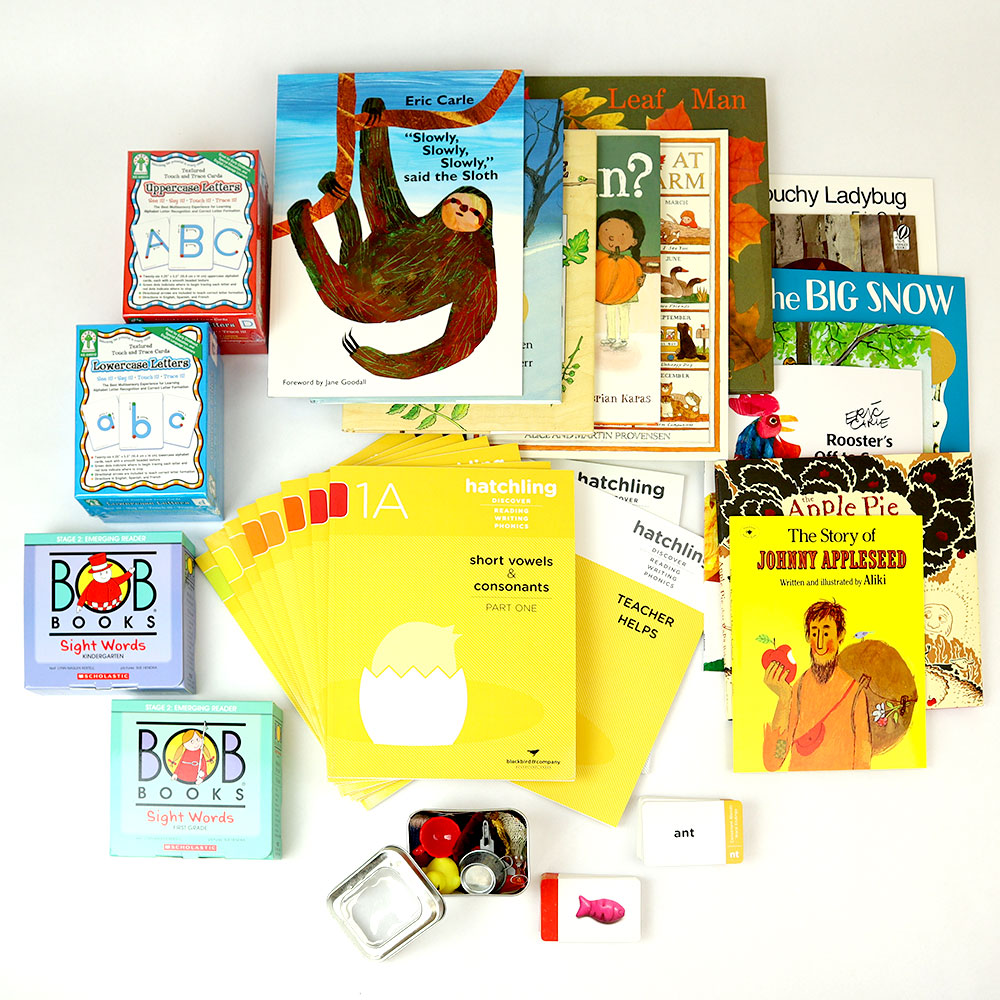
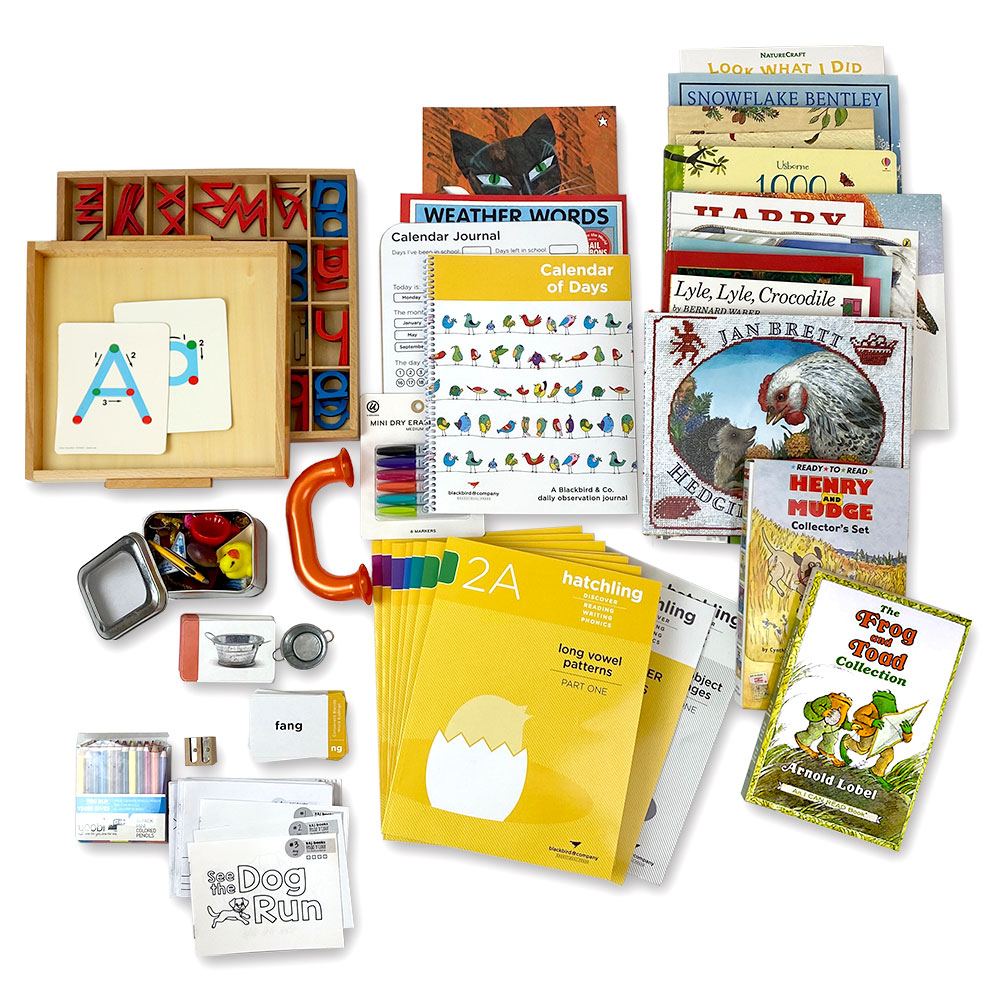
We are so pleased to announce the arrival of our Hatchling Discovery Guides! This integrated, multi-sensory approach encourages Kindergarten through 2nd Grade learners to discover the complex connections between reading and writing the fun way.

 Our Hatchling unit is designed to be paced over the course of two years as a comprehensive language arts program that introduces all the skills necessary to read fluently and write fluidly. Over the course of 52 weeks (2 school years), your little ones will discover the joys of reading and writing, delighting in the process.

Each year the phonics of reading and writing is introduced in a logical progression from initial sounds to more complex patterns in three concise student journals. Our teacher guide is designed to help you mentor and inspire your students through their individual important work. There are no lessons to prepare, but rather time to come alongside.

Each week students will:

  • Learn and practice phonics using miniature objects and colorful didactic flashcards 
  • Utilize a moveable alphabet and the sand tray to reinforce learning
  • Read, write, and acquire sight vocabulary
  • Read exceptional literature
  • Create meaningful journal entries
  • Engage in line-work activities that strengthen developing fine motor skills

complete first grade language arts

For second year students in 1st or 2nd grade, we’ve added an element that teaches the four types of sentences and offers an opportunity to practice the art of sentence crafting using the miniature objects. Mazes, too, are a fun addition at this level, further developing fine motor skills and logic.

And, in line with all our offerings, we’ve tied writing to great stories. What better to spark the child’s imagination than an endearing tale?

All this, plus “just right” readers along the way, enables your students to practice phonics as it is being introduced.

We believe the best kind of learning is happy learning . Hatchlings will open the door to the wonder and potential of language, inspiring curiosity and independence along the way. Both Volume 1 and Volume 2 will be available for pre-order at blackbirdandcompany.com April 1st. Hatchlings will begin shipping early June to those who place early orders. Stay tuned for more details.

Posted on

Zinnia’s Flower Garden

Zinnias
Zinnia’s Flower Garden by Monica Wellington leads off week two in our Earlybird Spring Stories Thematic UnitThis is a great week to plant some flower seeds for your summer garden. There are excellent instructions at the back of the book on how to begin. Get a little notebook and keep a garden journal noting what you planted and how long each seed took to sprout. Take photos too! Wouldn’t it be fun to press the flowers come summer when they bloom. Here are some flower presses or you can make your own.
When you plant your flowers consider planting these five flower species that really help the Monarch butterfly survive on it’s long migration. Spider Milkweed (zones 5-9) blooms May-July, Chives (zones4-9) bloom April-June, Siberian Wallflower (zones 3-9) blooms March-May, May Night Salvia (zones3-9) blooms March-May and Common Milkweed (zones4-9) blooms June- August.
 
You will be richly rewarded with Monarchs in your yard and your children will be able to watch the lifecycle of thee amazing animals up close and personal.
 
 
-Sara
Posted on

Smell the Roses

SeashellsJPG
Don't forget to stop and smell the roses? 

…oh, wait!

What I meant to say is, "Don't forget to stop and observe the seashells!"

And when you do, ask yourself, "What do I see?"

Notice the organic shape. Look for the complex colors. Do you see the orange and blue making each other sing?

And whenever you observe something, make note of it in your Observation Journal like Marlo does!

Observe

Do you see how she closely observes line and texture and and shape and color inherent to the Nuttalia obscurata ("purple varnish clam")? 

Now you try.

Find an object from nature in your neck of the woods. Journal your observations using words and images.

And don't forget to smell the roses.


-Sara 


Posted on

From Question to Quest

Ricketts
Rickettsia is a Monera that is transmitted by Arthropods such as fleas, lice, and tics and can cause harmful diseases such as Rocky Mountain Spotted Fever. This. This particular class of Monera was as named after pathologist Howard Taylor Ricketts

But what is Rickettsia? And why is it a Monera? 

If you are working through our 8-week unit Taxonomy of Living Things: The Five Kingdoms, the week #4 lesson is all about Monera. In fact, during the last 5 weeks of the unit, students will explore the characteristics of each kingdom and then be set free to do some independent research of a representative species. Included in each week's research is the opportunity to practice close observation. 

Close observation is not about developing art skills as much as it is about developing the concentrated skill of looking. The keys to close, scientific observations are to look purposefully, slow down, and keep going. Not everyone can draw like Leonardo, but everyone can draw. 

To begin, the more materials at hand the better. Use a variety of pencils and pens, and always use more than one color. The more details the better. Think line, texture, value, shape, color and always notice the relationship between the five.

And if getting started is difficult, look to someone else and ask, "What did they do?" Take a few minutes to look at Marlo's Rickettsia. What do you notice? What types of lines do you see? And what is the quality of those lines (thick to think straight, curved, jagged, dotted)? How does she make use of color? Texture? Value? Shape? And so on. Make a list and incorporate those qualities in your drawing. Be sure to label all parts and make notes as necessary. 

I hope, in the end, you are noticing all the questions involved in doing research. Science, after all, is an adventure that begins with a question and culminates in a quest. 


-Kim

Posted on

Fibonacci on the Produce Aisle

Fibonnaci
Math is everywhere. Absolutely everywhere!

When I saw this vegetable ate the market, I stopped to ogle. It was fun to learn that it is sometimes called Romanesco cauliflower, sometimes Romansch broccoli. Either way, I was not thinking of the thing as food, only sheer math! 

Can you see it?

Whoa.

Fibonacci.

And then I thought to myself, "This is math my students can get behind." So I pulled out a book:

Fibonacci

And later I stirred up some soup and called my family to dinner.


-Kim

Posted on

Happy Birthday Ben?

NOT really…!

Ben’s family birth certificate says that he was born on January 6, 1706, but when the Colonies switched to a different calendar to keep pace with the seasons, his new birthday became January 17!

Founding Father.

One of five men who crafted the Declaration of Independence.

Once, the Postmaster General.

Founded the idea of the public hospital and library.

Organized the first volunteer fire department which led to his concept of fire insurance.

The architect of Poor Richard’s Almanac.

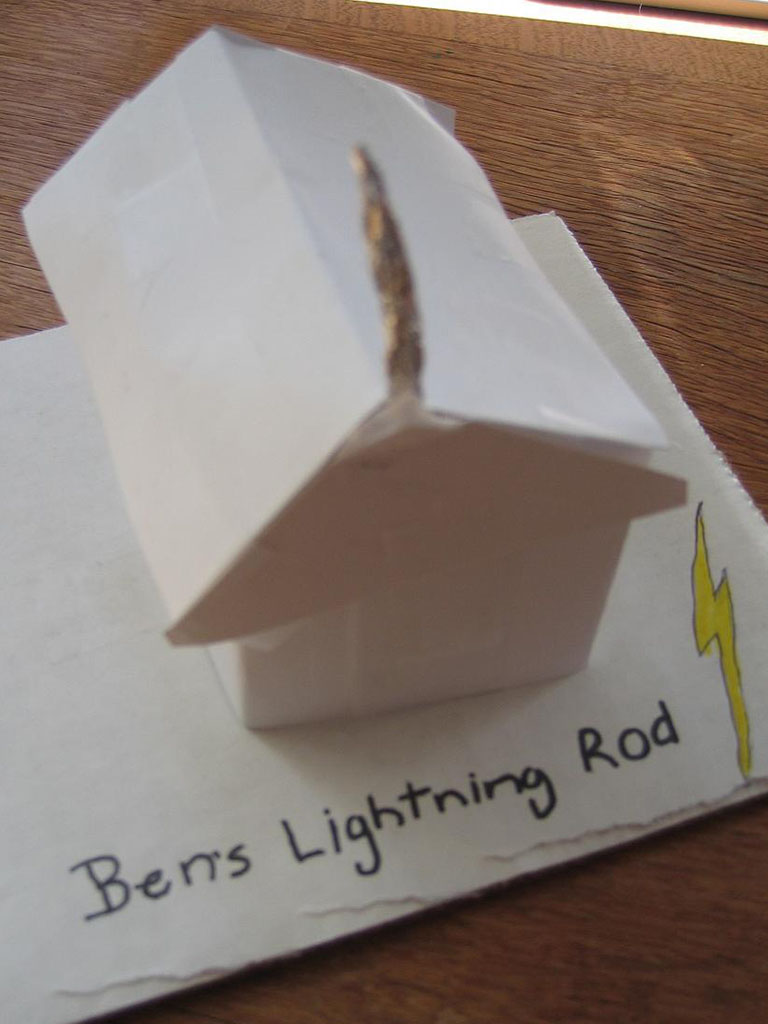
Inventor of the glass armonica, bifocals, swim fins, Franklin Stove, and, of course the lightning rod.

Honorary degrees from Harvard, Yale, University of St. Andrews, University of Oxford, and University of Edinburgh.

Spent 27 years of his life living abroad, crossing the Atlantic 8 times!

Earned his place on the $100 dollar bill.

All this more than 311 years ago!

Celebrate this life well spent one of two ways:

Ever wonder where inventors get their ideas? As it turns out, the great inventor Benjamin Franklin got his best ideas from a mouse named Amos (not really, but make for an adventurous historical fiction)! Consider this from historian David McCullah who read the book as a child:David McCullogh says “I can never be in Old Christ Church without wondering if perhaps some of Amos’s line are still there, back behind the paneling.” Pick up a bundle today. Who knows, you might cultivate a historian!

Early to bed and early to rise… you know the rest (I hope).

Benjamin Franklin was the youngest of seventeen children. He was the inventor whose thirst for knowledge led him to constantly seek to improve the lives of his fellow men. Follow his life as a leader in the American Revolution and ambassador to both Britain and France and learn why the French hailed him as the man who “tore the lightening from the sky and the scepter from tyrants.” Explore this an so much more in the D’Aulaire recounting of the life of Ben Franklin. And over the course of 5 weeks you student will not only be guided through the crafting of an original essay, but will discover just how valuable a life can be.


-Kim